Keep Clean Coils Cleaner, Longer
First Strike Micro-Coat is a long-lasting, field-applied coil treatment designed to help reduce buildup, promote water sheeting, preserve heat transfer, and extend the time between coil cleanings.
- Designed to help maintain clean coils after service.
- Promotes water sheeting to help wash away contaminants.
- Field-applied with no special equipment or training required.
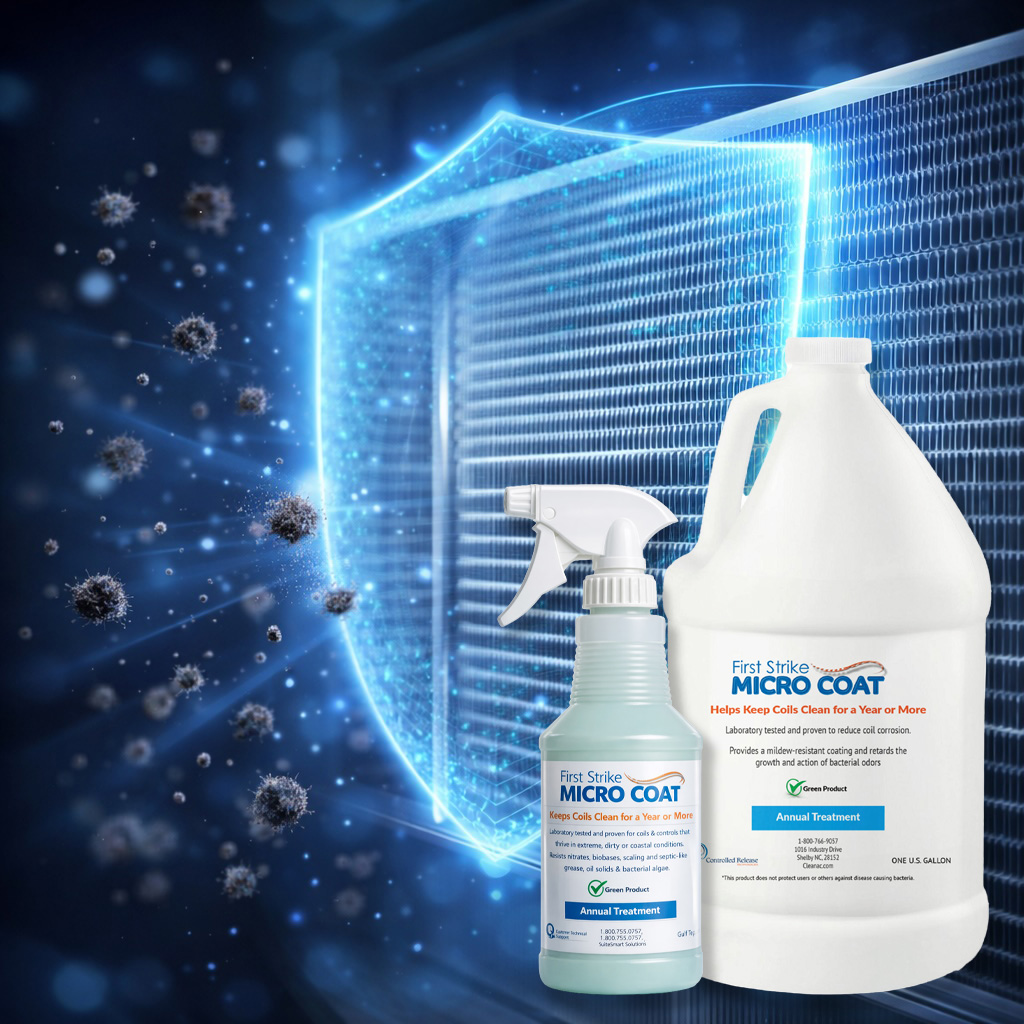
Product visuals
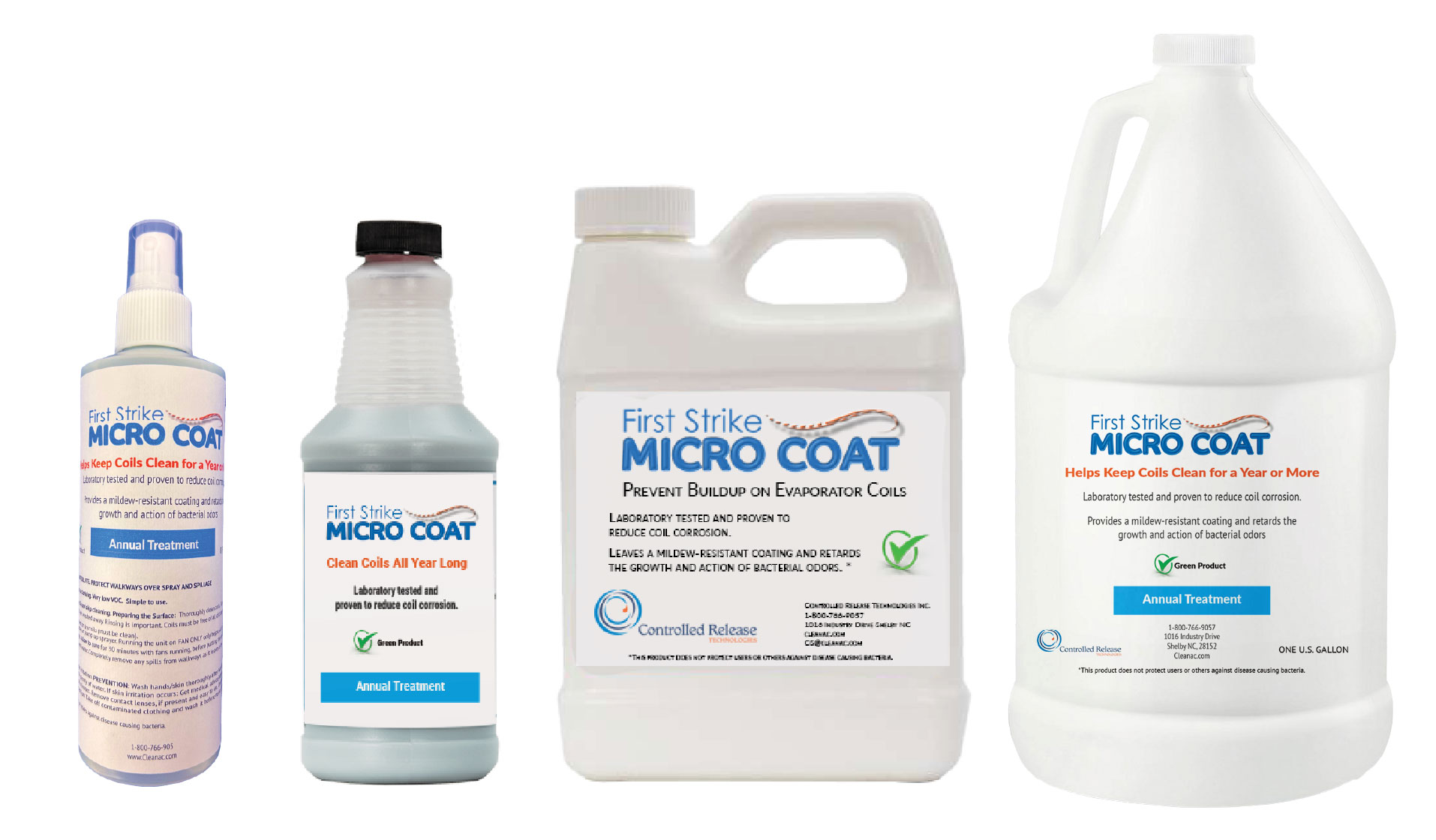
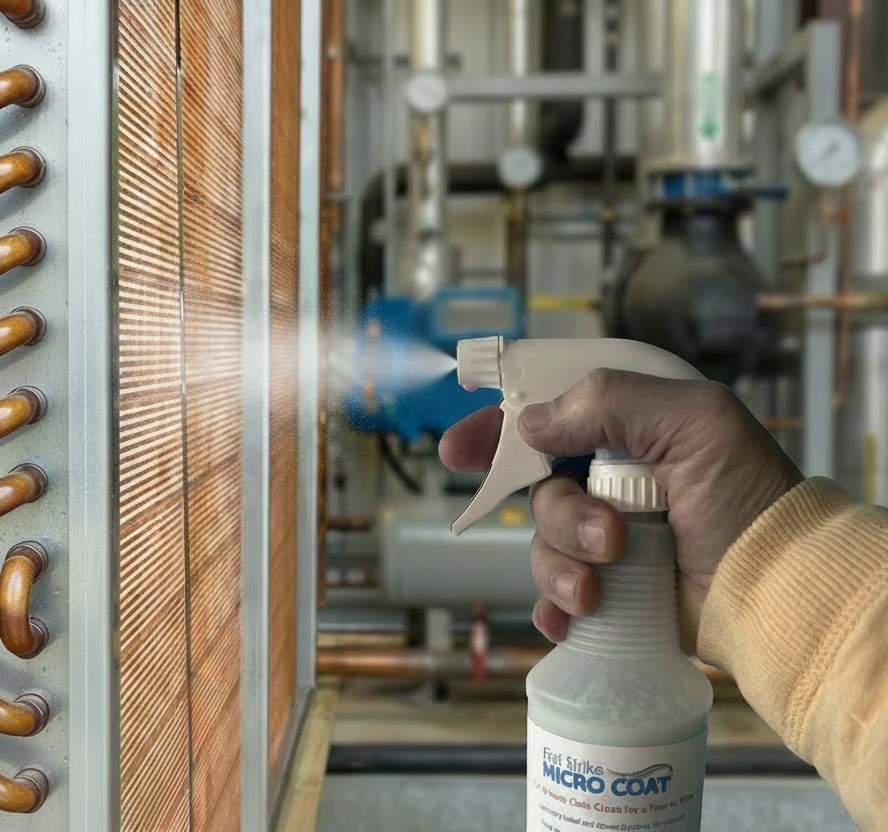
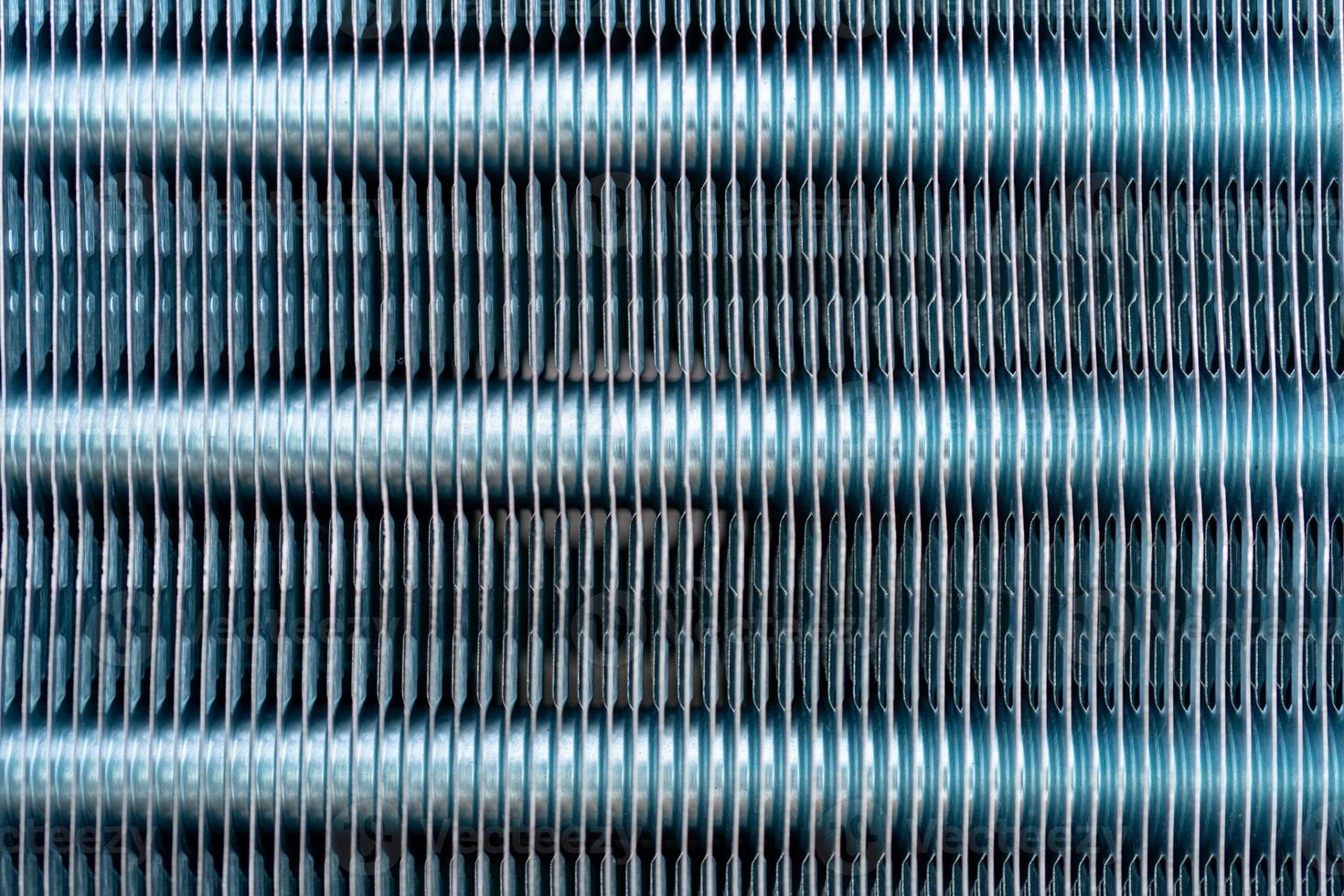
At a glance
Quick qualification for techs, facility managers, and distributor teams. Full details are in the spec sheet.
Clean coils rarely stay clean for long
After cleaning, airborne contaminants like dust, dirt, pollen, and organic material can quickly begin collecting on coil surfaces again. As buildup returns, airflow becomes restricted and heat transfer declines, increasing energy demand and leading to repeated cleaning cycles. First Strike Micro-Coat was developed to help maintain the clean by reducing how easily contaminants stick to the coil surface.
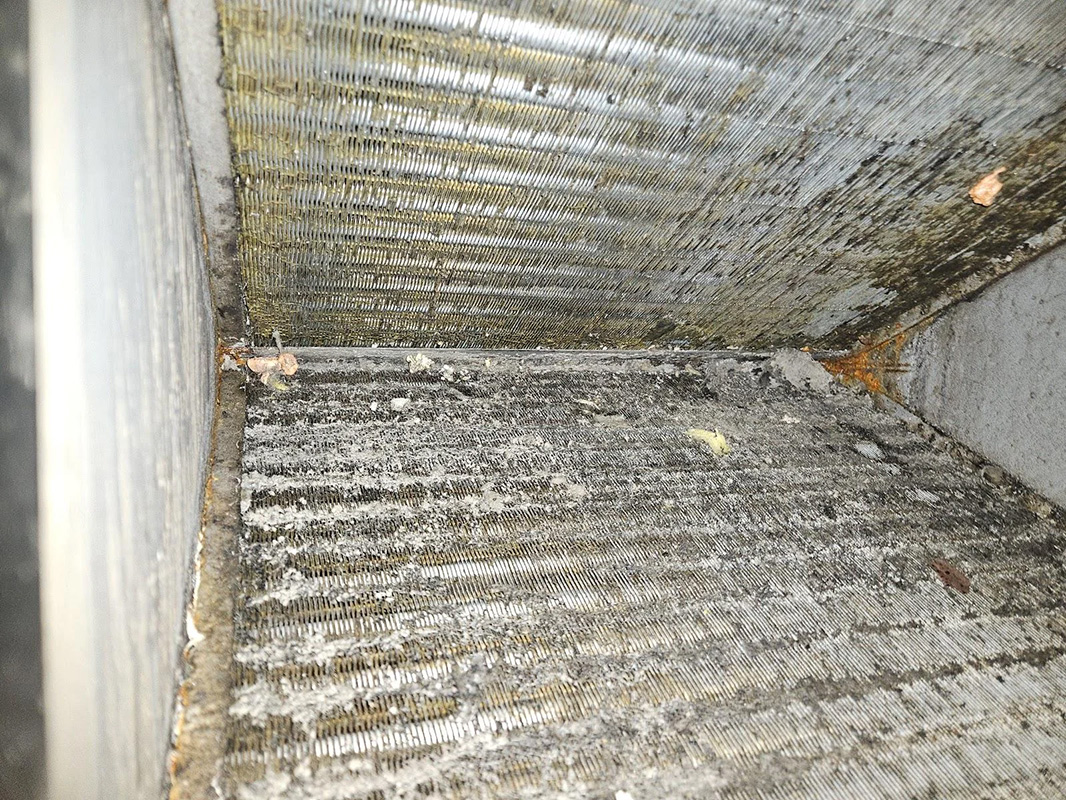
Key benefits
Focus on outcomes that matter to operators and maintenance teams: cleaner operation, preserved performance, fewer complaints, and less maintenance churn.
Keeps coils cleaner longer
Helps reduce adhesion of dust, dirt, pollen, and organic buildup so coils stay cleaner between service intervals.
Promotes water sheeting
Encourages condensate to sheet across coil surfaces instead of beading, helping wash contaminants away during normal operation.
Preserves heat transfer
Designed to protect cleaned coil surfaces without creating a heavy insulating layer that can interfere with performance.
- Reduces labor demands: Helps extend the time between intensive coil cleanings, supporting preventive maintenance programs and reducing repeat service needs.
- Field-applied protection: Applies directly on-site after cleaning with no special equipment, making it practical for service technicians.
How it works
- Clean the evaporator coil thoroughly to remove existing buildup.
- Apply an even coat of First Strike Micro-Coat to the coil surface.
- Allow the coating to dry or cure according to label directions.
- During operation, condensate sheets across the surface, helping carry away contaminants.
- Reapply as part of routine maintenance after the protection interval.
Ideal for facilities where recurring buildup, odor complaints, and frequent coil cleaning drive maintenance costs.
- Commercial HVAC preventive maintenance programs
- Multi-family and hospitality properties
- Facilities with recurring odor or buildup issues