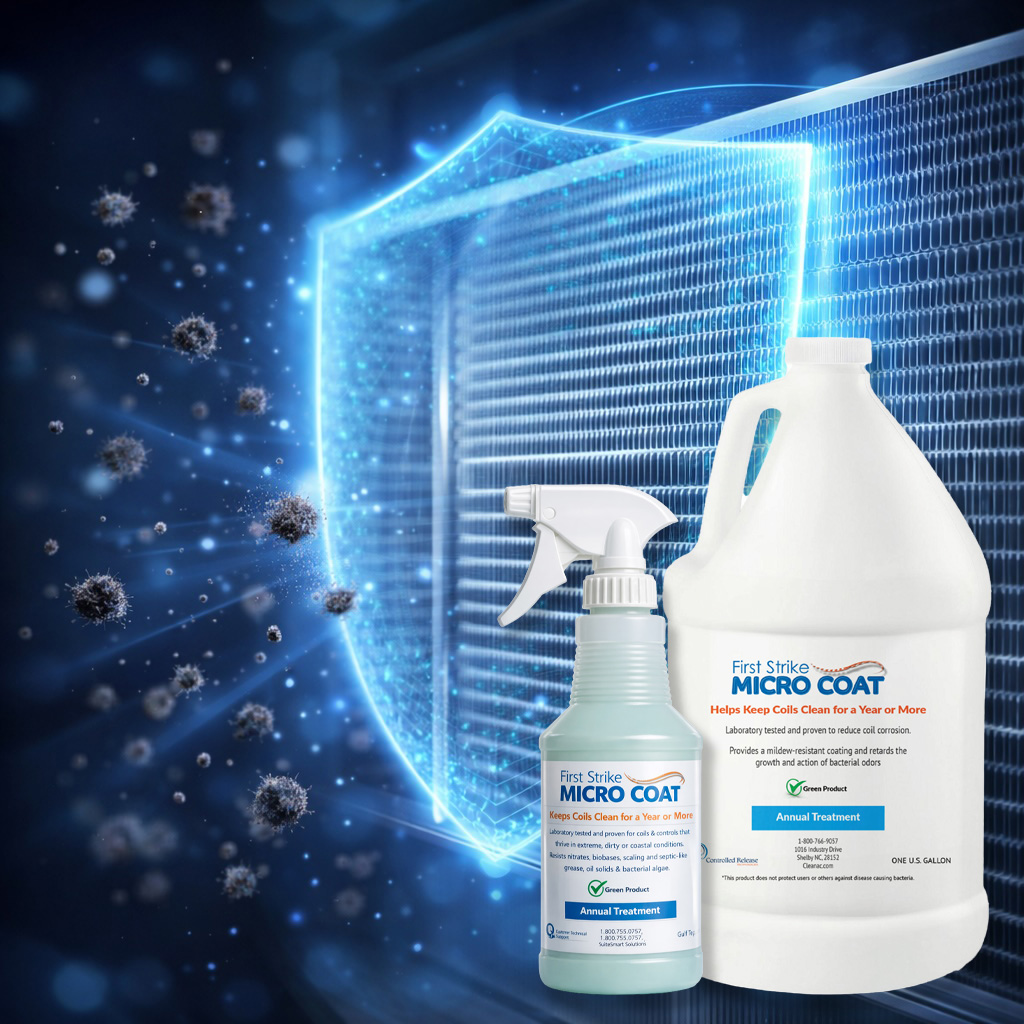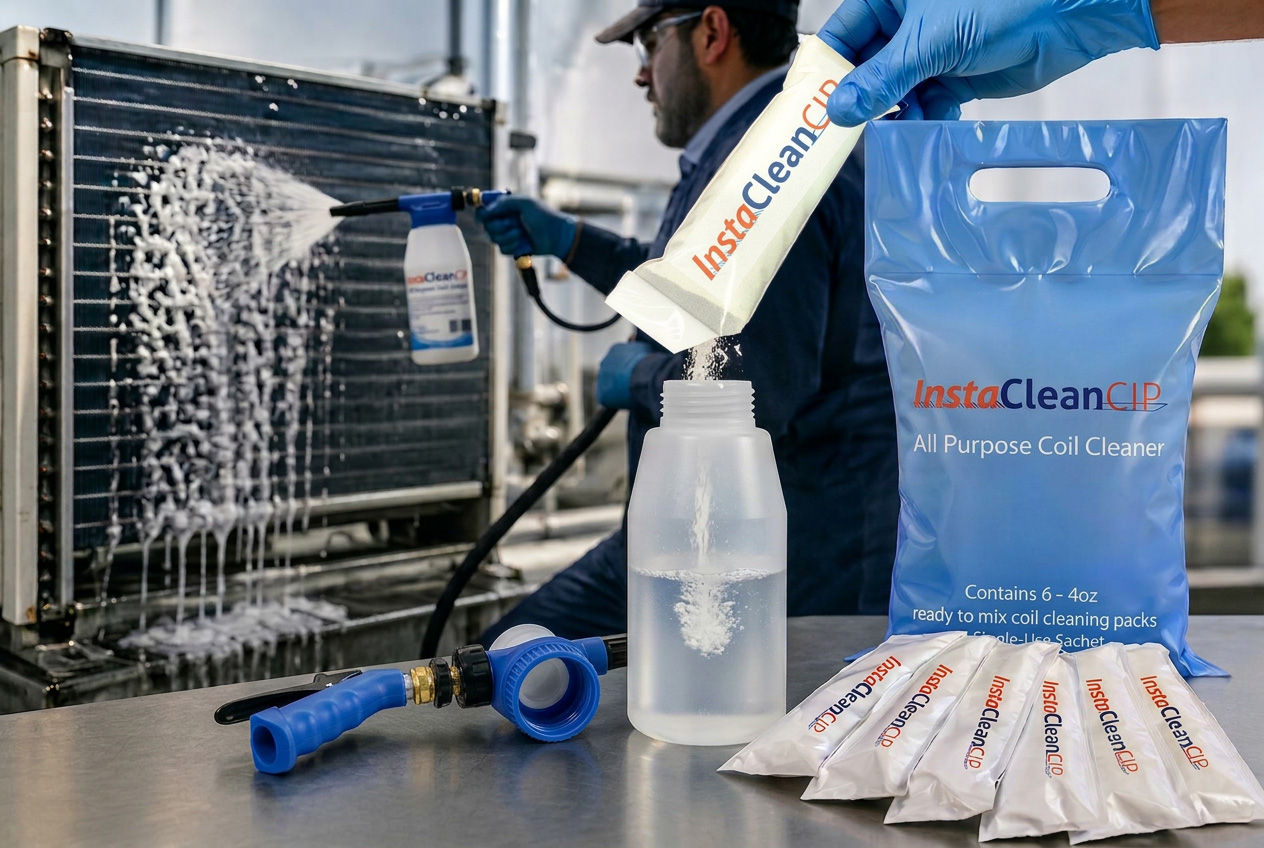

Long-Lasting Protection for Outdoor Condenser Coils
Coil Shield helps protect outdoor condenser coils from corrosion, mineral scale, salt spray, and environmental exposure, supporting efficiency and extending equipment life.
- Designed for outdoor condenser coils exposed to harsh environments.
- Supports both commercial and residential HVAC systems.
- Helps resist corrosion, mineral scale, and coastal salt exposure.

Product visuals
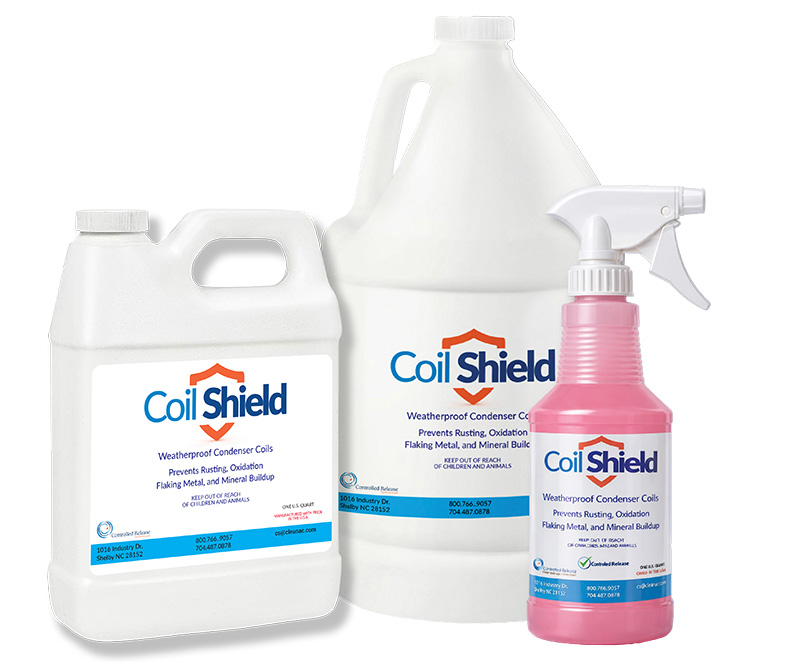
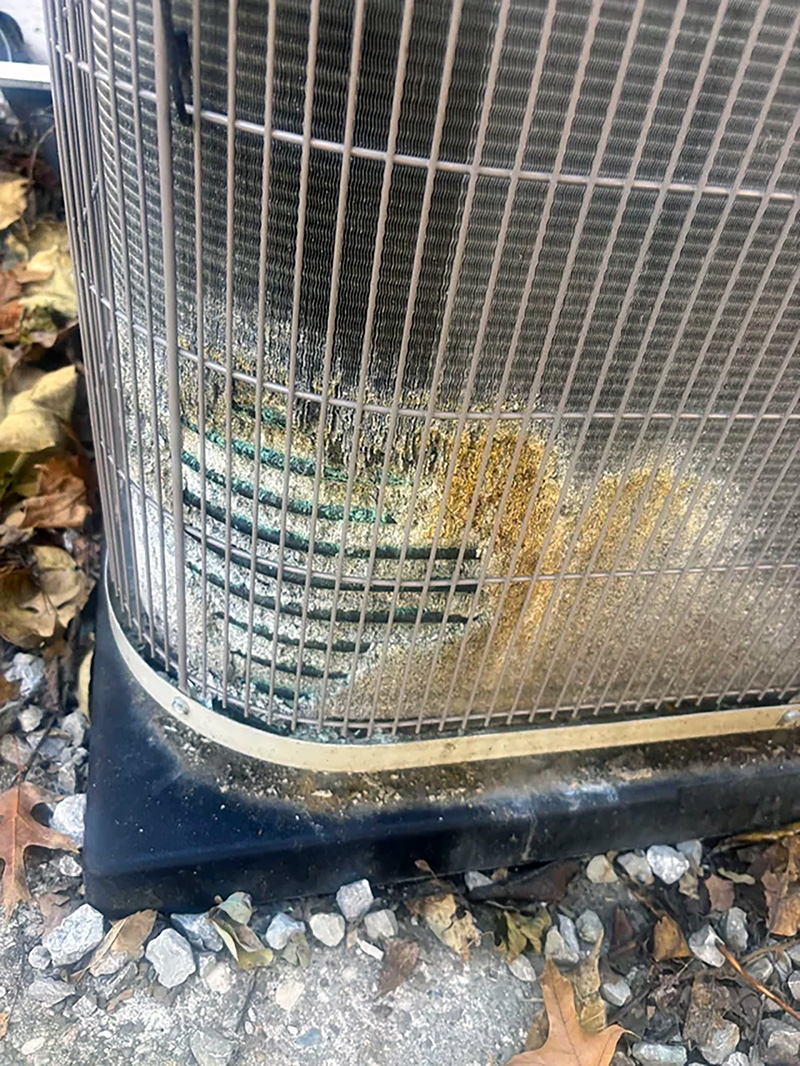
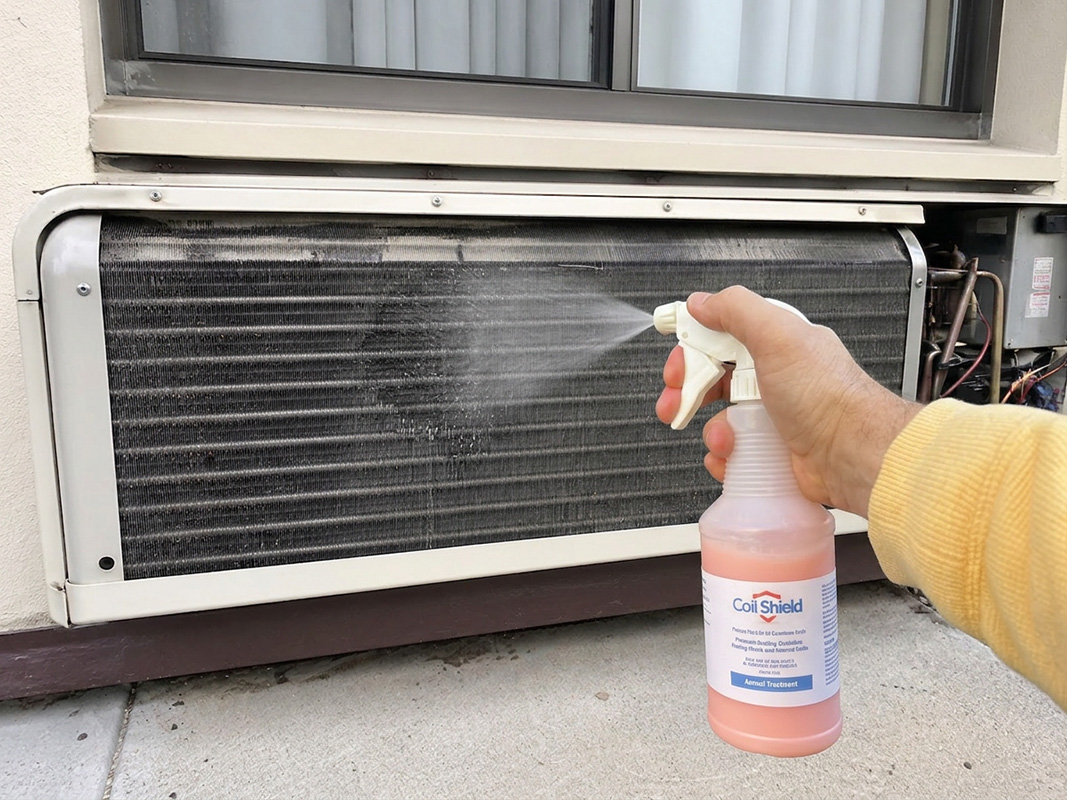
At a glance
Quick qualification for techs, facility managers, and distributor teams. Full details are in the spec sheet.
Outdoor condenser coils take constant environmental abuse
Outdoor condenser coils are continually exposed to rain, humidity, airborne contaminants, and salt spray, especially in coastal environments. Over time, that exposure can accelerate corrosion, reduce heat-transfer efficiency, increase energy consumption, and shorten equipment life.

Key benefits
Focus on outcomes that matter to operators and maintenance teams: cleaner operation, preserved performance, fewer complaints, and less maintenance churn.
Mineral resistance
Helps guard against mineral deposits caused by evaporation, supporting cleaner coil surfaces and airflow.
Lower energy costs
Helps prevent efficiency loss by preserving cleaner condenser coil surfaces for better heat transfer.
Corrosion protection
Helps extend condenser coil life by shielding surfaces from corrosion, mineral scale, and environmental exposure.
- Annual protection: One application can provide season-long protection, reducing cleaning frequency and helping extend coil life.
- Environmental defense: Helps protect exposed outdoor coils from rain, humidity, airborne contaminants, and coastal salt spray.
How it works
- Clean the outdoor condenser coil thoroughly and allow surfaces to dry.
- Apply Coil Shield evenly to the target condenser coil surfaces according to label instructions.
- Allow the coating to dry or cure as directed before returning the unit to service.
Ideal for outdoor condensers in commercial and residential systems, especially where rain, humidity, airborne contaminants, or coastal salt exposure threaten long-term performance.
- Commercial outdoor condenser units
- Residential air-conditioning condensers
- Coastal and high-humidity environments
- Systems exposed to mineral deposits and airborne contamination